
Branding & project planning / Guide 23
Can You Add Dimensional Letters, Metal Logos or Routed Elements to an Existing Sign?
Sound existing signs can often receive dimensional letters, metal logos, routed panels, or new lighting. The substrate, structure, power, mounting conditions, and repair costs determine what is practical.
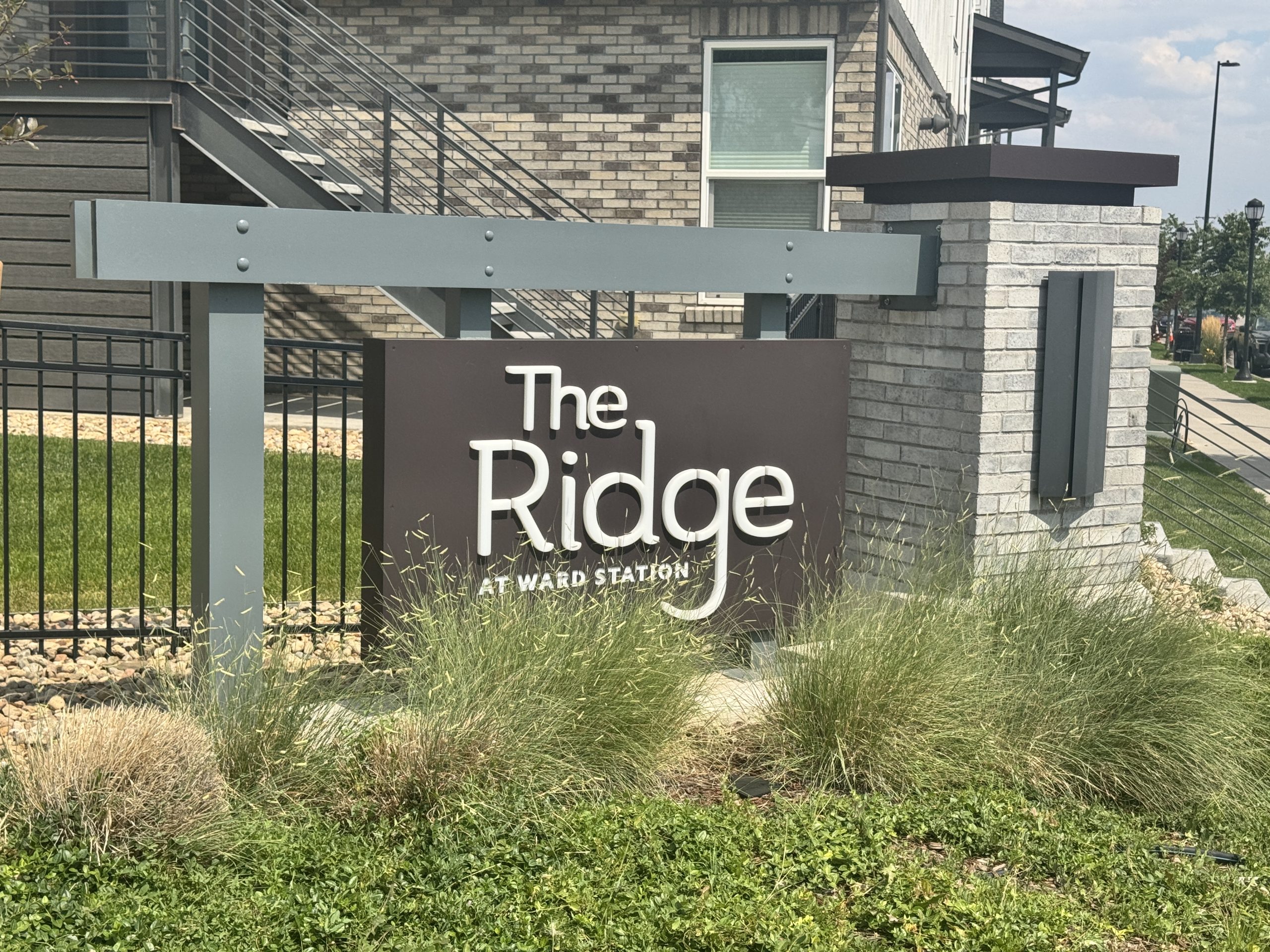
Yes—and this is one of the best ways to transform an existing sign without replacing the entire structure.
Many older monument and building signs are fundamentally sound but visually flat.
Perhaps the structure is good.
The masonry is attractive.
The size works.
The location works.
But the identifying graphics are outdated, faded or simply lack dimension.
Adding dimensional elements can give that existing structure an entirely different appearance.
What Do We Mean by Dimensional Letters?
Dimensional letters physically project from the sign surface.
They may be:
- Flat-cut aluminum
- Fabricated aluminum
- Stainless steel
- Bronze
- Acrylic
- HDU
- Laminated acrylic
- Cast metal
- Illuminated channel letters
Projection may range from a fraction of an inch to several inches.
Even shallow dimension creates natural shadow, which gives the lettering greater visual separation from the background.
Build dimension on a sound foundation.

Evaluate the existing sign before adding weight, holes, lighting, or new architectural elements.
Flat Graphics Versus Dimensional Graphics
Imagine the same logo two ways.
Version one is printed directly onto a flat panel.
Version two is fabricated from brushed aluminum and mounted one inch away from a stone background.
The information is identical.
The perceived quality is not.
Dimensional components become architectural objects.
That is why they are particularly effective when renovating an existing monument.
Can Dimensional Letters Be Added to Masonry?
Usually, yes, assuming the substrate and construction are suitable.
Letters may be mounted to:
- Stone
- Brick
- Concrete
- Stucco
- Fabricated metal
- Aluminum composite panels
- Existing sign cabinets
The exact attachment method depends on what is behind the visible surface.
A thin stone veneer requires different planning from solid concrete.
Metal Logos
Metal logos work exceptionally well on existing monuments.
Depending on the design, materials can include:
- Aluminum
- Stainless steel
- Brass
- Bronze
- Copper
The metal can be:
- Painted
- Brushed
- Polished
- Satin finished
- Powder coated
Architectural Signs currently fabricates dimensional exterior letters and logos in flat-cut, fabricated, cast and acrylic forms, with mounting selected for the actual application.

Dimension creates separation and shadow.
Material and projection can give familiar lettering a stronger architectural presence.
Routed Elements
CNC routing allows us to create shapes that go well beyond ordinary letters.
Routed components can include:
- Logos
- Architectural borders
- Background panels
- Decorative patterns
- Recessed lettering
- Raised lettering
- Frames
- Faux architectural details
Materials might include aluminum, acrylic, HDU and various composite panels.
This can be especially effective when the existing structure has good scale but lacks architectural detail.
Can You Make an Old Rectangular Sign Look Less Like a Box?
Often.
We can potentially add:
- New caps
- Side elements
- Layered faces
- Dimensional bands
- Routed panels
- Metal trim
- Decorative uprights
- New color blocking
These additions can visually change the silhouette without rebuilding the entire structure.
There is a point, however, where modification becomes more expensive than replacement.
We evaluate that honestly.
There is no benefit in proudly saving $2,000 worth of old structure by spending $12,000 working around it.
Several layers can change the appearance.

Choose materials and mounting for the actual application, including what lies behind the visible surface.
Can Dimensional Elements Be Illuminated?
Yes.
Existing monuments may be candidates for:
- Halo-lit dimensional letters
- Face-lit channel letters
- Push-through acrylic logos
- Internally illuminated routed faces
Whether that is practical depends on:
- Cabinet depth
- Existing electrical service
- Service access
- Background material
- Sign construction
If illumination is being added to a previously non-electric sign, permitting and electrical requirements may also change.
UL identifies UL 48 and UL 879A among the standards applicable to electric signs and LED retrofit systems.
Push-Through Acrylic Can Modernize an Existing Cabinet
If the existing monument contains a fabricated sign cabinet with sufficient depth, a new routed face with push-through acrylic can completely change the appearance.
The opaque face is routed to the shape of the logo or letters.
Acrylic components extend through those openings.
LED lighting inside creates the illumination.
Architectural Signs has used push-through acrylic and internal LED lighting on modern Colorado monument projects.

Layered elements can renew an existing form.
A sound existing sign may support new panels, letters, and architectural detailing.
What If the Existing Surface Is Uneven?
Stone and textured masonry require additional thought.
Letters can often be stud mounted into the surface.
Spacers may be used to create a consistent projection despite variations behind them.
Sometimes installing a clean architectural panel over the uneven surface provides a better base for dimensional copy.
That can produce an intentional layered look rather than fighting the substrate.
We Need to Inspect the Old Sign First
Before adding weight or drilling holes, we need to understand what is there.
An existing monument may have:
- Corrosion
- Loose masonry
- Water intrusion
- Damaged framing
- Delaminating panels
- Poor previous repairs
Dimensional lettering should not become expensive decoration attached to a failing wall.
Rebranding Is a Natural Opportunity
This type of renovation is especially useful when a property changes ownership or identity.
Instead of rebuilding a good monument:
- Remove old letters.
- Repair the surface.
- Refinish or repaint.
- Install new dimensional branding.
- Upgrade lighting if appropriate.
The result can look dramatically different.
Check feasibility before promising a transformation.

Old mounting holes may remain visible; repairs and new panels should be considered in the scope.
Will the Old Letter Holes Show?
Possibly.
When old stud-mounted letters are removed, mounting holes may remain.
We can often:
- Patch them
- Repaint the surface
- Cover them with a new panel
- Integrate them into a renovation
The existing surface should be evaluated before promising that every trace will disappear.
Stone and brick can be harder to repair invisibly than painted metal.
How Do We Determine Whether This Makes Sense?
Send us photographs showing:
- Full monument
- Sign face
- Side view
- Existing letters
- Surface condition
- Nighttime lighting if applicable
Approximate measurements help.
From there we can determine whether dimensional upgrades are likely to be practical.
If the existing sign has a good foundation, useful proportions and sound construction, dimensional lettering and routed architectural elements can often give you most of the visual benefit of a new monument without throwing away the parts that are still doing their job.
Sources & further reading
Architectural Signs: dimensional exterior signage ↗ UL Solutions: electric signs, UL 48, and NEC Article 600 ↗Permit requirements are property-specific. Confirm the locally adopted code and edition. Denver is a local example, not a statewide rule.
