
Monument signs / Guide 13
What Is the Best Type of Lighting for a Monument Sign?
Choose lighting for readable nighttime identity, appropriate brightness, and architectural character. Compare internal, push-through, halo, face-lit, and external illumination alongside power and maintenance needs.
The best monument-sign lighting is not necessarily the brightest.
It is the lighting that makes the sign easy to identify at night while supporting the architecture rather than overpowering it.
A well-lit monument should have a nighttime identity of its own.
The customer should not need to see the sign during daylight to understand what it says after dark.
Several lighting methods can accomplish that.
The right one depends on the sign materials, site, brand, electrical conditions and desired appearance.
Internal Cabinet Illumination
This is the traditional approach.
LED modules are placed inside a sign cabinet.
Light passes through translucent faces or selected translucent graphics.
Internal illumination provides strong visibility and can be practical for:
- Retail
- Multi-tenant properties
- Medical facilities
- Commercial developments
- Properties operating after dark
Modern LED technology has largely replaced fluorescent lamps in new applications because of its efficiency, compact size and flexibility.
Choose the nighttime character.

The lighting method should suit the sign materials and the setting.
Push-Through Acrylic
For an architectural monument, push-through illumination can provide a much more dimensional appearance.
The main sign face remains opaque.
Letters or logos are routed through the face.
Thicker acrylic elements extend through those openings.
LED modules inside the cabinet illuminate the acrylic.
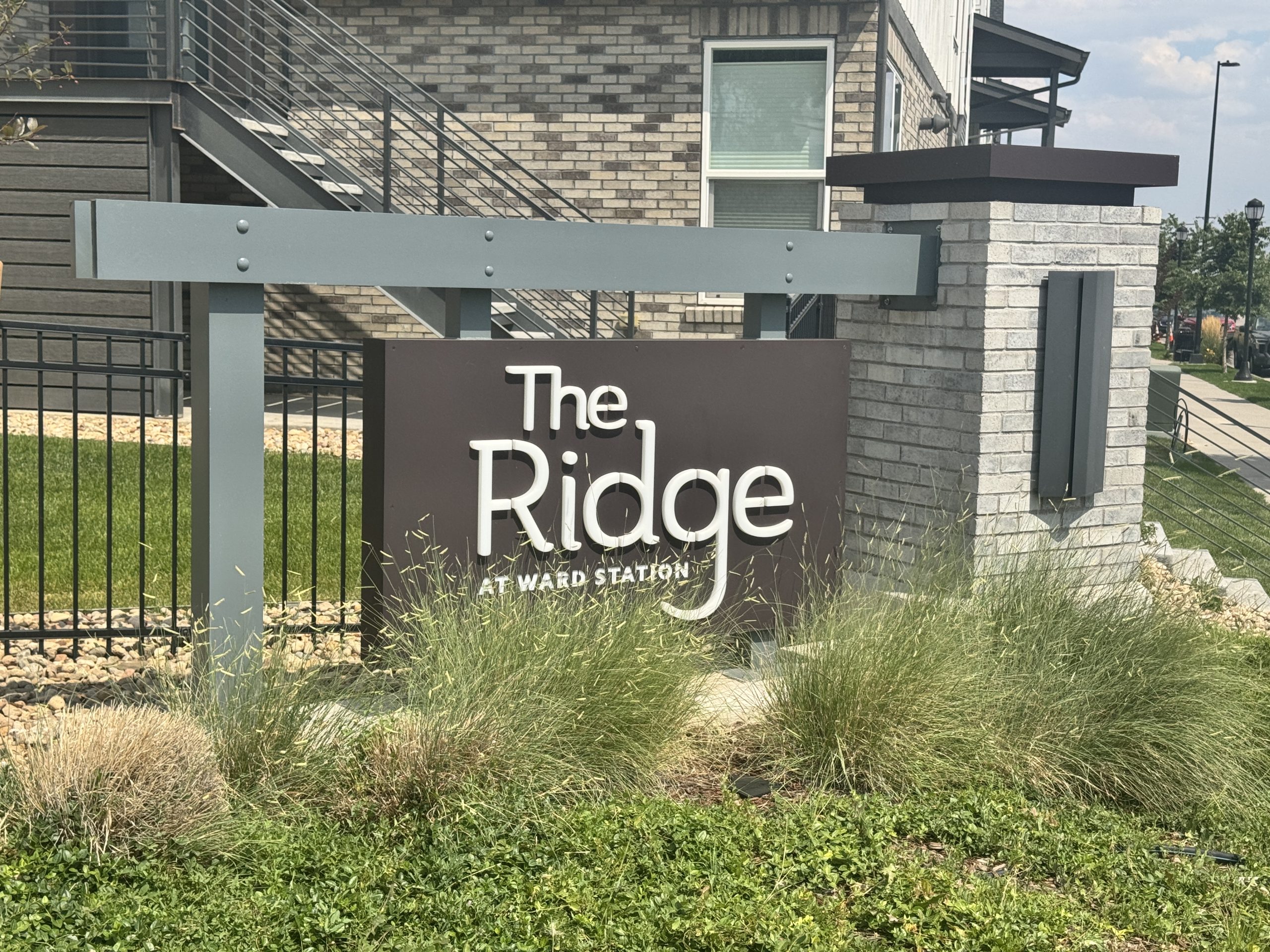
Architectural Signs used this method for The Ridge at Ward Station, combining fabricated aluminum cabinets with push-through acrylic lettering and internal LED illumination.
During the day, the acrylic provides physical dimension.
At night, the same elements become illuminated.
That gives the monument two related but distinct appearances.
Halo Illumination
Halo lighting is one of the most refined options for dimensional monument lettering.
The face of the letter remains opaque.
LEDs inside or behind the letter shine backward.
The light reflects against the sign surface and forms a glow around the letter.
The effect is softer than direct face illumination.
Halo lighting works particularly well for:
- Healthcare
- Senior living
- Corporate properties
- Residential communities
- Hospitality
- Higher-end office developments
It can feel architectural rather than commercial.
Face-Lit Letters
Face-lit channel letters produce more direct light.
The letter body is fabricated with a translucent face.
LEDs inside illuminate toward the viewer.
This can be an excellent choice where strong nighttime readability matters.
The appearance is more assertive than halo lighting.
That may be ideal on a busy commercial road and unnecessary at a quiet neighborhood entrance.

Illuminate the identity with intention.
Selective illumination gives the name a clear nighttime presence while the cabinet remains visually quiet.
External Illumination
Sometimes the monument itself does not need to contain any lighting.
Ground-mounted or concealed fixtures can illuminate the sign surface.
External illumination works especially well with:
- Natural stone
- Etched stone
- Brick
- Carved HDU
- Dimensional metal letters
- Masonry monuments
Light cast across a textured surface creates shadows.
That can make the sign architecture more dramatic after dark than a glowing cabinet would.
The International Sign Association recognizes external lamps, internal illumination and directly illuminated elements as the principal broad approaches to sign lighting.
The Problem With Ground Lighting
External lighting is attractive, but fixture placement needs to be protected.
Landscape fixtures can be:
- Covered by snow
- Blocked by shrubs
- Hit by lawn equipment
- Knocked out of alignment
- Damaged during maintenance
In Colorado, putting a critical light source two inches above grade deserves some thought before winter arrives.
Which Lighting Is Most Readable?
There is no one winner.
Readability depends on:
- Letter size
- Contrast
- Brightness
- Background
- Viewing distance
- Traffic speed
A well-designed halo sign can be extremely readable.
A poorly designed internally illuminated cabinet can be difficult to read if the entire surface glows and the copy lacks contrast.
Lighting supports typography.
It does not replace it.
Readability is a complete design decision.

More brightness alone cannot solve small letters, poor contrast, or an obstructed view.
More Brightness Is Not More Quality
Over-lighting is a common mistake.
An excessively bright sign can produce glare.
It can irritate nearby residents.
It can wash out letterforms.
It may also run afoul of local brightness limitations.
ISA specifically recommends checking local illumination and brightness requirements as part of sign design.
The goal is enough luminance to separate the message clearly from its surroundings.
After that, additional brightness may not help.
Color Temperature Matters
LED light is available in different color temperatures.
A warmer light can complement:
- Stone
- Brick
- Brass
- Wood tones
A cooler or neutral white can fit:
- Contemporary aluminum
- Gray architecture
- Medical properties
- Modern corporate branding
The appropriate choice should be coordinated with both the sign materials and the building.

Let light reveal the stone.
Fixture placement should account for winter conditions, landscape growth, and maintenance access.
Color Rendering Matters Too
Lighting affects how brand colors appear at night.
ISA recommends considering the color-rendering properties of the illumination source when accurate brand-color appearance is important.
A poorly selected light source can make carefully specified materials look completely different after sunset.
Serviceability Is Part of Lighting Design
Every electrical component eventually becomes a maintenance item.
Even long-life LED systems can experience:
- Power-supply failures
- Module failures
- Wiring issues
- Water intrusion
- Connection problems
A good monument allows technicians to access those components without dismantling half the masonry.
UL 48 includes safety considerations for modern LED electric-sign construction, including issues such as moisture and corrosion.
Consider the Electrical Source Early
An illuminated sign needs power.
The cost difference between an electrical source ten feet away and one two hundred feet away can be significant.
Site planning may involve:
- Trenching
- Conduit
- Wiring
- Restoration
- Electrical permitting
If the sign will be illuminated, that decision belongs near the beginning of the project.
Plan beyond the first night.

Coordinate applicable lighting requirements and qualified electrical work early.
Which Lighting Does Architectural Signs Use?
Different projects receive different solutions.
Architectural Signs has produced monuments using internally illuminated acrylic, halo-lit lettering and other LED techniques, with lighting selected to match the property and architectural intent.
That is the way we prefer to approach it.
Not:
Which lighting package do you want?
But:
What should this sign look like at night?
Our General Rule
If the monument needs strong commercial visibility, internal or face illumination can be very effective.
If the project calls for a premium architectural character, push-through acrylic or halo lighting often produces a more refined appearance.
If the monument is primarily stone or masonry, exterior illumination may be worth serious consideration.
The best monument lighting is controlled, readable and intentional. If the first thing someone notices is the lighting rather than the name on the sign, we may have missed the point.
