
Monument signs / Guide 08
How Does Architectural Signs Design Monument Signs to Withstand Colorado Weather and Wind?
Design for the actual site: a continuous structural load path, appropriate foundations, exterior materials, protective finishes, drainage, thermal movement, and service access. There is no universal wind-design requirement for every Colorado monument.
Colorado is a wonderful place to live.
It is also a fairly aggressive testing laboratory for exterior signs.
A monument sign in Colorado may encounter intense sunlight, large temperature changes, snow, freezing conditions, hail, wind and relatively dry air—sometimes in combinations that would seem excessive if Colorado did not consider them a perfectly normal Tuesday.
That means exterior signage needs to be designed as an outdoor structure, not simply as a graphic mounted outside.
Wind Is a Structural Design Issue
A monument sign presents a broad surface to the wind.
Even a relatively low sign can develop substantial forces during a wind event.
Those forces travel from the sign face through the frame, into the posts or structural members, through the anchors and ultimately into the foundation and soil.
That load path matters.
Where adopted, the International Building Code’s Appendix H requires signs to withstand wind pressure under the structural provisions of the code. ASCE 7 includes wind-load provisions for solid freestanding signs. The locally adopted code and applicable edition must be confirmed for the project.
This does not mean every monument in Colorado has one universal wind-speed requirement.
Wind design is project-specific.
The applicable code, location, risk category, exposure, topography and sign configuration can all affect the engineering.
When engineering is required, the structure and foundation should be evaluated for the actual site.
Wind forces need a continuous path to the ground.

Conceptual load path only. Member sizes, connections, anchors, and footings require site-specific design.
The Foundation Is Where Durability Begins
Nobody photographs the concrete footing for the company website.
It is still one of the most important parts of the sign.
A monument may need substantial concrete below grade even when the visible portion appears relatively modest.
The footing needs to resist forces generated by the structure.
Foundation design may consider:
- Sign dimensions
- Wind loads
- Structure weight
- Soil conditions
- Post or frame configuration
- Frost and environmental conditions
- Local engineering requirements
Guessing at foundation requirements because “this is how we’ve always done it” is not how larger structural signs should be approached.
We Use Materials Appropriate for Exterior Exposure
Fabricated aluminum is particularly useful for Colorado signs.
It is lightweight relative to steel, highly workable and does not rust in the same manner as ordinary carbon steel.
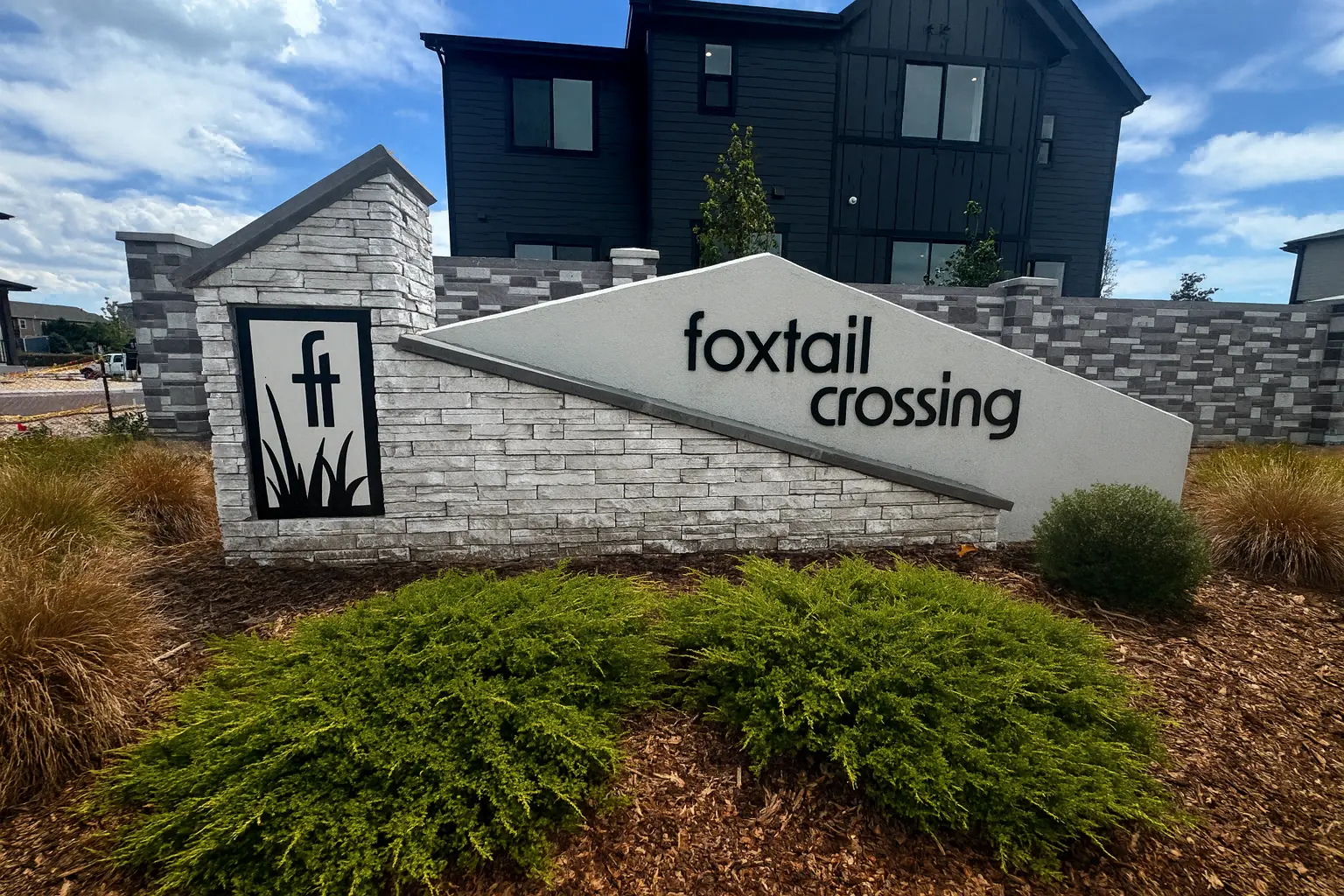
Architectural Signs has used fabricated and powder-coated aluminum extensively on Colorado monument projects, including The Ridge at Ward Station and Foxtail Crossing.
Steel may still be the right choice for internal structural framing.
Where steel is used, corrosion protection and proper detailing become important.
Stone, masonry, acrylic, HDU and other materials may also be incorporated depending on the design.

Plan for the site through the seasons.
Consider snow accumulation, visibility, and snow-removal access as part of the location decision.
UV Exposure Is Real in Colorado
Colorado’s elevation contributes to strong solar exposure.
The Colorado Climate Center notes that the state’s high elevation allows increased penetration of solar radiation and that Colorado also experiences large seasonal and day-to-night temperature swings.
Signs experience that exposure every day.
Paint systems, vinyl, printed graphics, plastics and coatings should therefore be selected for exterior performance.
That does not mean nothing will ever fade.
Everything exposed to sunlight ages eventually.
The objective is to select materials and finishes that age predictably and can be maintained or refinished when necessary.
Expansion and Contraction Need Somewhere to Go
A dark metal sign sitting in direct summer sun can become significantly warmer than the surrounding air.
Then the temperature can fall dramatically overnight.
Materials expand and contract.
Different materials do so at different rates.
That becomes especially important where aluminum, acrylic, masonry, steel and adhesives come together.
Proper fabrication allows movement where appropriate rather than trapping components so tightly that thermal expansion creates stress.
Moisture Needs an Exit
Exterior signs should not be built like aquariums.
Water will eventually find opportunities to enter almost any outdoor enclosure.
Good design therefore focuses not only on keeping water out but also on preventing moisture from becoming trapped.
Drainage, ventilation, seams and service openings all need to be considered.
This becomes particularly important with illuminated signs.
UL’s electric-sign guidance addresses issues such as corrosion prevention and moisture accumulation in electric-sign construction.
Design for the whole Colorado exposure.

Durability comes from addressing several exposures together, not from a single material choice.
Freeze-Thaw Conditions Affect Masonry
Stone and masonry can be excellent monument materials in Colorado.
But construction details matter.
Water that enters cracks, joints or poorly detailed caps can freeze and expand.
Repeated cycles can damage masonry over time.
Proper caps, drainage, mortar, sealants and construction methods help manage that exposure.
The visible stone may be the architectural star of the show, but the detailing behind it determines how gracefully it ages.
Snow Should Be Considered During Design
Snow can create practical problems even when it is not a primary structural concern.
A sign mounted too close to grade can have its identifying copy obscured after plowing.
Landscape lighting can disappear underneath snow.
Drifts can cover low address numbers.
Snow-removal equipment can strike poorly located monuments.
Those are site-planning issues as much as fabrication issues.

Durability is built into the details.
Finishes, seams, moisture management, and service access contribute to exterior performance. This is a concept, not a construction detail.
Hail Is Another Colorado Reality
No exterior sign can be made absolutely hail-proof.
But material selection matters.
Thin brittle components can suffer more damage than robust fabricated materials.
For illuminated faces, we consider the material, thickness and exposure.
For dimensional signs, metal components often provide excellent durability.
The goal is to avoid creating fragile exterior details simply because they looked attractive in the rendering.
Serviceability Is Part of Durability
An illuminated sign will eventually require service.
Even high-quality LEDs and power supplies do not last forever.
A sign that requires partial demolition every time a power supply needs replacement was not designed thoughtfully.
Access panels, removable faces and logical electrical layouts make long-term maintenance easier.
That is part of building a sign to last.
Small details protect the larger investment.

These are planning considerations, not installation specifications or an engineering detail.
Engineering and Fabrication Need to Work Together
A structural engineer can calculate loads.
A fabricator understands how the sign actually goes together.
The strongest projects combine both perspectives.
The engineered frame, mounting system and foundation need to be translated into something that can realistically be fabricated and installed.
Architectural appearance should not be compromised unnecessarily.
We would rather hide the engineering inside the architecture than let structural necessities make the sign look structural.
Built for the Actual Site
A monument sign in a sheltered courtyard and a sign exposed on an open ridge should not automatically receive identical treatment.
That’s why good exterior sign design begins with the location.
Colorado weather is not a reason to make every sign look like a bunker. It is a reason to engineer the structure correctly, select durable materials and pay attention to details that most people will never notice—because those are usually the details that keep the sign standing and looking good years later.
Sources & further reading
Colorado Climate Center: Colorado climate ↗ ASCE: structural design loads and ASCE 7 ↗ ICC: IBC Appendix H sign provisions (adoption must be verified) ↗ UL Solutions: electric signs, UL 48, and NEC Article 600 ↗Permit requirements are property-specific. Confirm the locally adopted code and edition. Denver is a local example, not a statewide rule.
