
Monument signs / Guide 10
What Information Do You Need From Me to Provide a Monument Sign Estimate?
Start with the property address, site photos, approximate size, logo, lighting preferences, and any landlord, developer, or HOA sign criteria. Send what you have; the remaining details can be developed together.
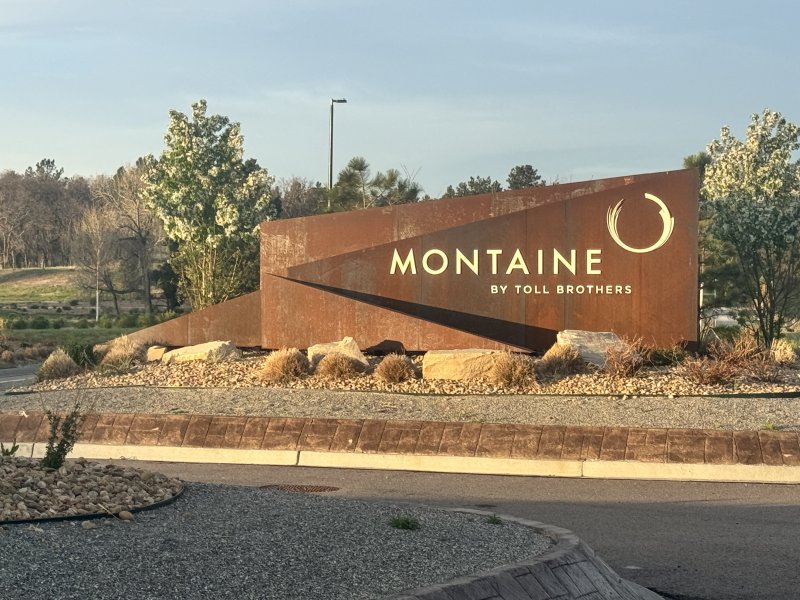
You don’t need to arrive with engineered drawings and a complete set of construction documents.
But the better the information we have at the beginning, the more useful the estimate will be.
For most monument-sign projects, there are six categories of information that allow us to get started quickly.
1. The Property Address
Start with the address.
It sounds almost too simple, but this tells us a great deal.
The property address helps identify:
- Municipality
- General zoning context
- Road configuration
- Property type
- Surrounding architecture
- Potential sign-code requirements
- Access considerations
A sign cannot really be designed intelligently without understanding where it will live.
The same six-foot monument might work beautifully at one property and be completely ineffective at another.
Six useful pieces for a better estimate.

You can start without a complete set. Send what is available and identify what is still unknown.
2. Site Photographs or Building Elevations
Good photographs are incredibly useful.
For a new monument, stand where the proposed sign will be located and photograph:
- The roadway
- Approaching traffic directions
- The building
- Landscaping
- Existing signs
- Nearby utilities or fixtures
Take some photographs from farther away.
Close-up photographs show construction conditions.
Distant photographs show how the sign will actually be seen.
If the property is under construction, send architectural elevations or renderings instead.
We want to understand the building materials, colors and architectural language.
The best monument signs belong to the property visually.

Bring the starting information together.
An address, logo, photographs, approximate size, and preferences make the first conversation more productive.
3. Approximate Sign Size
If you know the desired dimensions, send them.
If not, tell us approximately what you are trying to accomplish.
For example:
“We think it should be about eight feet wide.”
or:
“The sign needs to fit between these two landscape beds.”
or:
“We want something visible from the road but not oversized.”
All of those are useful.
We can help develop the scale.
If there is an existing monument being replaced or renovated, measure:
- Overall width
- Overall height
- Sign-face dimensions
- Base dimensions
- Letter height
Even approximate measurements are helpful during conceptual estimating.
4. Logo Artwork and Brand Standards
Send your logo.
Vector artwork is best whenever available.
Common vector formats include:
- AI
- EPS
- SVG
- Vector PDF
If all you have is a JPEG or PNG, send it anyway.
We can determine whether the file is usable or needs to be recreated.
Brand standards are also very helpful.
Those might specify:
- Pantone colors
- Fonts
- Clear-space requirements
- Approved logo versions
- Prohibited modifications
- Finish expectations
A monument sign is a physical interpretation of a brand.
Some logo elements that work beautifully on a website may need to be adapted for dimensional fabrication, but the goal is to preserve the identity.
Photograph the sign and its surroundings.

Wide views explain context; close views explain condition. Night views help with an existing illuminated sign.
5. Tell Us Whether the Sign Should Be Illuminated
This is a major pricing variable.
Possible approaches include:
- Non-illuminated
- External illumination
- Internally illuminated cabinet
- Push-through illuminated letters
- Halo lighting
- Face-lit lettering
- Electronic message display
If you’re not sure, tell us when the property needs visibility.
For example:
“We need the development name readable at night.”
That gives us enough information to begin discussing options.
Also tell us whether electrical power already exists near the proposed sign.
Running power twenty feet and running power two hundred feet are two very different conversations.
6. Landlord, Developer or HOA Sign Criteria
If someone else controls the sign standards for the property, we need those documents.
Shopping centers, business parks, apartment developments and master-planned communities frequently have private sign criteria in addition to municipal regulations.
Those requirements may control:
- Size
- Materials
- Colors
- Illumination
- Logo placement
- Approved sign types
- Mounting
- Architecture
Sending those standards early prevents us from designing something that has no chance of approval.

Show the approach as well as the sign.
Photos from several distances help explain visibility, access, landscape, and existing conditions.
Additional Information That Helps
The more we know, the better.
Useful information can include:
Target installation date
Are you opening in six months?
Six weeks?
Yesterday?
The schedule can influence materials, permitting strategy and fabrication planning.
Budget
You do not have to give us a budget.
But if one exists, telling us can save everyone time.
If you have $15,000 available, there is little value in showing you a $45,000 concept.
Conversely, we do not want to strip all the architecture out of a design because we assumed a low budget that never existed.
Inspiration photographs
Send us examples of signs you like.
They do not have to be ours.
We are trying to understand what catches your eye.
Is it the stone?
The lettering?
The lighting?
The contemporary shape?
The examples help establish direction.
Existing electrical conditions
For illuminated monuments, photographs of nearby electrical service or information from the property electrician may be useful.
Access conditions
Tell us about anything unusual.
A monument inside a tight landscaped island can require different equipment than one accessible from a wide parking lot.
A useful estimate grows from useful information.

Budget, target date, and inspiration images help align the concept before detailed pricing.
What If You Don’t Have All of This?
Send what you have.
Seriously.
We can begin with:
- An address
- A logo
- A few photographs
- A sentence describing what you want
The rest can be developed.
Architectural Signs’ current exterior-sign process specifically invites customers to begin with basic project information and then develops recommendations based on the sign’s use, site and requirements.
Better Information Produces Better Estimates
There is a difference between a rough budget and an actual project estimate.
A rough budget might be based on an approximate size and material.
A more complete estimate considers site conditions, structural requirements, illumination, installation and approvals.
We would rather tell you what information is missing than pretend an incomplete number is exact.
To get started, send the property address, a few good photographs, your logo, an approximate size, any sign criteria you have and whether you want illumination. From those six pieces of information, we can usually move the conversation forward quickly.
