
Monument signs / Guide 06
Can an Existing Monument Sign Be Updated or Re-Faced Instead of Completely Replaced?
A sound foundation and structure may allow new faces, lettering, finishes, masonry repairs, or LED upgrades. Inspect the existing monument and confirm local requirements before deciding what to retain.
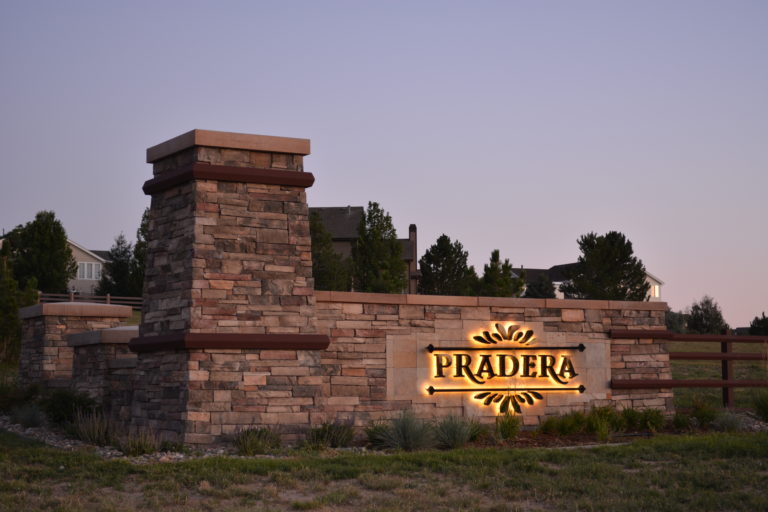
Absolutely. In fact, sometimes tearing out an existing monument sign and starting from scratch is the last thing we would recommend.
If the existing sign has a sound foundation, a solid internal structure and proportions that still work for the property, renovating or re-facing the monument can save a substantial amount of money while producing a sign that looks completely new.
We have renovated monument signs with everything from new paint and graphics to replacement dimensional lettering, new architectural panels, repaired masonry and LED lighting retrofits. Architectural Signs has documented projects where older monuments were pressure-washed, repainted, re-lettered, had stone repaired and received updated LED lighting rather than being demolished.
The trick is knowing when the old sign has good bones—and when those bones are ready for retirement.
Start With the Structure
Before worrying about colors, logos or lettering, we need to determine what is underneath the existing sign.
A monument may contain:
- Structural steel
- Aluminum framing
- Concrete block
- Masonry
- Wood framing on older signs
- Fabricated aluminum cabinets
- Concrete foundations
- Combinations of several of these
If the foundation and structural framework are solid, there may be very little reason to remove them.
That can be a substantial advantage because excavation, demolition, disposal, concrete work and new structural fabrication can represent a meaningful portion of a monument-sign budget.
On the other hand, putting a beautiful new face on a failing structure is not renovation. It is postponing the inevitable.
We look for corrosion, movement, cracking, water intrusion, deteriorated framing and other structural problems before recommending that an old monument be reused.
Start with what is worth saving.

Condition and proposed scope guide the decision. An on-site inspection may be necessary.
Re-Facing Can Completely Change the Appearance
One of the easiest upgrades is replacing the sign faces.
An old rectangular cabinet might currently have faded vinyl lettering or an outdated printed panel.
That same structure could potentially receive:
- New aluminum faces
- Routed dimensional lettering
- Push-through acrylic
- Dimensional metal logos
- New architectural finishes
- Updated tenant panels
- New color schemes
- New trim or reveals
Sometimes the sign does not need to become physically larger at all.
Better typography, stronger contrast and dimensional elements can make the same sign significantly more visible.
That is important because people often assume that an outdated sign needs to become bigger.
Frequently, it simply needs to become better.
A Rebrand Is a Perfect Time to Evaluate the Monument
Companies change logos.
Apartment communities change ownership.
Office buildings are repositioned.
HOAs update their image.
A monument sign that was appropriate fifteen years ago may no longer reflect the property.
If the underlying monument is sound, a rebrand may be accomplished by removing the old identifying elements and designing new components specifically for the existing structure.
This can be particularly cost-effective when the existing monument already has expensive features such as masonry, stonework or substantial foundations.
There is little reason to throw away thousands of dollars of perfectly good construction because the logo changed from blue to green.

Assess the structure before changing the face.
The existing foundation, frame, and masonry need evaluation before they can be retained.
Lighting Can Often Be Upgraded
Older illuminated monuments may still contain outdated fluorescent lamps, old power supplies or lighting layouts that produce uneven illumination.
Depending on the construction, those systems may be candidates for LED retrofit.
The International Sign Association specifically recognizes upgrading existing electric signs as a legitimate maintenance and modernization strategy and notes the increased viability of LED retrofits in cabinets originally designed for older lighting systems.
A lighting renovation can improve:
- Energy efficiency
- Light consistency
- Maintenance
- Night visibility
- Reliability
- Service access
But simply installing LEDs is not enough.
The lighting pattern needs to be designed for the sign.
LED modules placed too far apart can create bright spots and dark areas. Modules placed too close to a translucent face can create visible points of light.
Depth, face material, color and module spacing all matter.
Masonry Can Often Be Repaired Rather Than Replaced
Stone and masonry monuments frequently age better than the sign attached to them.
Mortar may need repair.
Individual stones may need to be reset.
Caps may need replacement.
Stucco might need resurfacing.
But the primary masonry structure can often remain.
This is especially useful when the monument was originally designed to match a clubhouse, development entrance or commercial building.
Rather than rebuilding an architectural feature that already works, we can concentrate the budget on the parts people actually notice.
Renovation can happen in layers.

Not every sign needs every upgrade. Select work that benefits the structure and the new identity.
Can We Change the Shape?
Sometimes.
An existing monument can often be modified with new architectural panels, caps, vertical features, dimensional elements or extensions.
But there is a limit.
If we are essentially constructing an entirely new sign around the old one, we need to ask whether keeping the original structure is accomplishing anything.
That is where value engineering becomes useful.
There is no prize for reusing an old monument at all costs.
Sometimes the sensible answer is:
Keep the foundation. Replace everything above it.
Other times:
Keep the masonry. Replace the sign cabinet.
And occasionally:
Get the excavator. This thing has done its duty.

Renew the identity while preserving useful construction.
New faces, finishes, and lettering can transform a sound monument. These concepts are separate illustrations, not a documented before-and-after project.
What About Permits?
This is an important consideration.
Maintenance and simple face replacements may be treated differently from enlarging or structurally altering a sign, but permit requirements vary by jurisdiction.
ISA recommends that sign regulations distinguish ordinary maintenance and upgrades from alterations that enlarge or substantially transform a sign. However, the actual rule that applies to your project comes from the local jurisdiction.
This matters especially with older monuments.
An existing sign may have been legally installed years ago under an older sign code. Major changes could potentially trigger current requirements.
Before turning a straightforward refurbishment into a regulatory adventure, it makes sense to research the property and proposed scope.
When Does Replacement Make More Sense?
We normally start leaning toward replacement when:
- The structure is badly corroded.
- The foundation is failing.
- The monument is leaning.
- Water damage is extensive.
- The existing size is no longer useful.
- The location needs to change.
- The new branding cannot reasonably fit the existing structure.
- Repair costs are approaching new-construction costs.
- The sign was poorly constructed in the first place.
There is also an aesthetic consideration.
Occasionally an old monument simply cannot be transformed into what the property needs without obvious compromises.
If the building just underwent a multimillion-dollar renovation, keeping a tired 1980s monument because “technically we can” may be false economy.
A new face cannot fix a failing structure.

These conditions may favor replacement. Confirm the structure and local requirements before reuse.
What Information Do We Need to Evaluate an Existing Sign?
Start with photographs.
Take pictures from:
- Straight in front
- Both sides
- Behind the monument
- Far enough away to show the surroundings
- Close enough to show deterioration
If the sign is illuminated, photographs of the sign at night can also be extremely helpful.
Dimensions are useful if available.
We may also need to inspect the sign in person before determining whether the structure can safely be retained.
Renovation Can Produce Some of the Best Value in Signage
A good monument sign represents a significant investment.
If part of that investment can be preserved, we should at least consider it.
A renovation might involve new paint, dimensional aluminum lettering, updated logos, new faces, modern LED illumination and repaired architectural finishes.
The result can look like an entirely different sign without paying to rebuild everything underneath it.
Before assuming that an old monument needs to be demolished, find out what is worth saving. A sign with a solid foundation and structure may be much closer to a new monument than it appears.
Sources & further reading
Architectural Signs: monument renovation ↗ City and County of Denver: sign and electrical permit requirements ↗ UL Solutions: electric signs, UL 48, and NEC Article 600 ↗Permit requirements are property-specific. Confirm the locally adopted code and edition. Denver is a local example, not a statewide rule.
