
Monument signs / Guide 11
What Is the Difference Between a Monument Sign and a Pylon Sign?
Monument signs sit close to the ground and complement the architecture. Pylon signs elevate the identity for longer-range visibility. Choose based on the site, traffic, tenants, maintenance needs, and local sign rules.
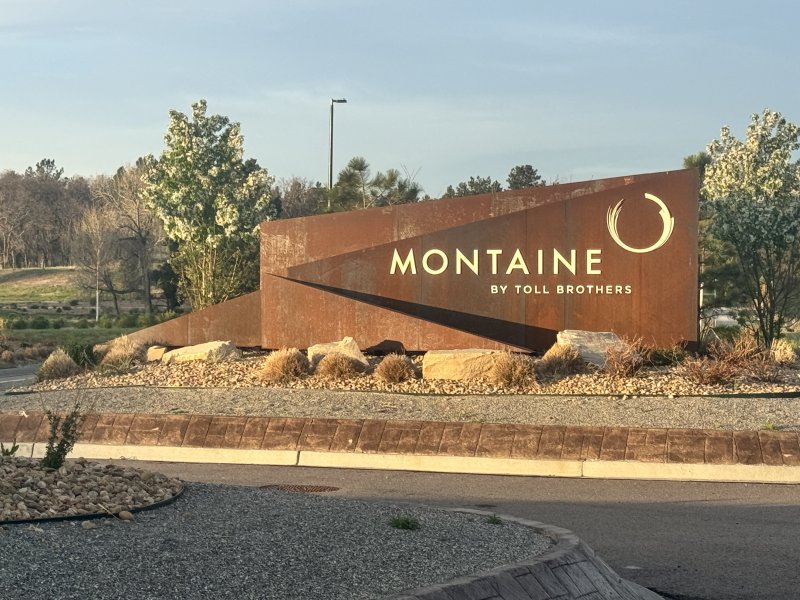
Monument signs and pylon signs have something important in common: both are freestanding signs designed to identify a property from the road.
After that, they become very different tools.
A monument sign generally sits relatively close to the ground and is designed to feel like part of the property’s architecture and landscaping.
A pylon sign is elevated substantially higher, typically on one or more structural poles or columns, and is designed primarily for long-distance visibility.
Neither is automatically better.
The right choice depends on where the property is located, how traffic approaches it, how far away the sign needs to be seen, the number of tenants it needs to identify, and—perhaps most importantly—what the local sign code allows.
What Is a Monument Sign?
A monument sign is a freestanding ground-level sign, usually supported by a substantial base or architectural structure.
Typical monument signs might incorporate:
- Masonry
- Stone
- Fabricated aluminum
- Architectural panels
- Dimensional metal letters
- Routed acrylic
- HDU
- Internal LED illumination
- Halo-lit lettering
Monument signs are commonly used at:
- Neighborhood entrances
- Apartment communities
- Senior-living communities
- Office developments
- Medical properties
- Corporate campuses
- Churches
- Schools
- Business parks
- Retail developments
The sign is usually designed as part of the property rather than as a separate advertising structure.
That architectural relationship is one of the monument sign’s biggest strengths.
Two sign types. Two primary jobs.

These are typical characteristics, not code definitions or permitted dimensions.
What Is a Pylon Sign?
A pylon sign places the identifying message substantially above grade.
The sign cabinet may be mounted between two poles, on a single structural support, or incorporated into an architectural tower.
Pylon signs are common at locations such as:
- Highway-oriented retail
- Shopping centers
- Hotels
- Restaurants
- Fuel stations
- Large multi-tenant commercial developments
Their primary advantage is height.
They may be visible over parked vehicles, landscaping and other buildings from much farther away than a low monument.
Current sign-industry descriptions make the same basic distinction: pylon signs emphasize long-range visibility, while monument signs emphasize ground-level architectural integration.
Visibility Is Usually the Deciding Factor
Suppose your property fronts a slow-moving local street.
Drivers can easily see the entrance, landscaping and building.
A six- or eight-foot architectural monument may provide excellent identification.
Now put the same business behind a large parking lot next to a six-lane road.
Traffic is moving faster, the building is farther from the road and competing signage surrounds the property.
That may be a much better environment for a pylon sign—assuming one is legally permitted.
The International Sign Association points out that sign effectiveness depends on factors including size, location, viewing angle, illumination and contrast. Traffic speed also changes the distance from which a sign must be detected and read.
In other words, height alone doesn’t solve everything.
But sometimes height is exactly what the site needs.

A monument establishes a sense of arrival.
Low architectural forms can connect the property identity to the building and landscaping.
Architectural Appearance Favors Monument Signs
This is where monuments usually win decisively.
A monument can incorporate materials directly related to the building.
If the property uses stone veneer and dark bronze metal, the entrance monument can use those same visual cues.
If the building is contemporary, the sign might use powder-coated aluminum, clean rectangular shapes and push-through illuminated lettering.
Architectural Signs uses precisely this approach on monument projects, coordinating materials, colors, lighting and branding with the surrounding property.
That turns the sign into part of the landscape architecture.
A pylon can certainly be designed attractively, but its job usually requires it to behave more like a tall visual marker.
Multi-Tenant Properties Complicate the Decision
Pylon signs frequently work well for shopping centers because they can hold numerous tenant panels at substantial height.
But this does not mean every multi-tenant property needs a pylon.
A professional office development may be much better served by a substantial monument containing a limited number of tenant identities.
A large retail center near a freeway may need something much taller.
The real question is not how many names can physically fit.
It is whether drivers can actually read them.
Twenty tiny tenant panels may satisfy twenty tenants politically while satisfying none of them visually.
Choose around the actual viewing conditions.

Height is one part of the decision. Readability and code compliance remain essential.
Sign Codes May Make the Decision for You
Before falling in love with either option, determine what the municipality permits.
Some jurisdictions restrict pylon or pole signs.
Others regulate them by zoning district, road frontage, property size or corridor.
Maximum heights can vary significantly.
The same is true for monument signs.
The allowable area, height, setback and number of freestanding signs are all local questions.
This is why code research belongs near the beginning of the design process.
We do not want to spend three weeks refining a beautiful 25-foot pylon sign only to discover the maximum permitted freestanding-sign height is eight feet.

A pylon raises the identity above the site.
Elevated signs can support longer-distance recognition where local rules allow them.
Cost Can Be Very Different
Both sign types can range from straightforward to elaborate.
However, a tall pylon typically involves significant structural considerations.
The supporting structure, foundation, wind loads, lifting equipment and installation can all become substantial.
Monuments may require masonry and considerable foundation work, but they tend to remain physically closer to grade.
That can sometimes simplify installation.
The correct comparison therefore isn’t:
Which type is cheaper?
It is:
Which type produces the visibility we need at an acceptable cost?
Maintenance Is Different Too
A monument can often be serviced relatively close to ground level.
A pylon may require a bucket truck or crane for electrical service or face replacement.
That does not make pylons impractical.
Commercial properties use them successfully every day.
It simply means long-term access should be part of the original decision.
Compare the complete ownership picture.

A taller sign may require different structure, equipment, and service access.
Illumination Works With Either Type
Both monuments and pylons can be illuminated.
Monuments often use:
- Push-through acrylic
- Halo-lit lettering
- Face-lit letters
- Internally illuminated cabinets
- External landscape lighting
Pylons frequently use internally illuminated cabinets, tenant panels or electronic message centers.
UL 48 is the principal safety standard for electric signs, and electric sign installations are also addressed by NEC Article 600.
Which One Should You Choose?
Start with the site rather than the sign.
Ask:
How fast is traffic moving?
How far from the road is the sign?
Are parked vehicles likely to block it?
Is the building visible?
How many tenants need identification?
What does the local code permit?
Does the property need architectural presence or maximum long-range exposure?
If you are developing an apartment community, senior-living facility, neighborhood entrance, professional office or corporate property, a monument will often make the most architectural sense.
If you’re identifying a freeway-oriented shopping center from several hundred yards away, a pylon may be a much more useful tool.
A monument sign says, “You have arrived.” A pylon sign says, “We are over here.” The right sign depends on which message your property actually needs to communicate.
Sources & further reading
International Sign Association: sign design and placement ↗ City and County of Denver: sign and electrical permit requirements ↗ UL Solutions: electric signs, UL 48, and NEC Article 600 ↗Permit requirements are property-specific. Confirm the locally adopted code and edition. Denver is a local example, not a statewide rule.
